


Have you ever wondered if stacking IT certifications truly gives you an edge—or if employers still value hard-earned experience more? In today’s hyper-competitive tech job market, the debate around certification vs experience is louder than ever.
Whether you’re just starting out or hoping to level up, knowing what hiring managers really want could be the key to unlocking career growth and landing your ideal job role. Let’s challenge what you’ve been told and uncover the truth.

Are IT Certifications Worth It Without Experience? Challenging What You’ve Been Told
The tech world can seem obsessed with certified professionals—every job posting or LinkedIn profile boasting a string of credentials. But is a certification enough to get your foot in the door if you lack actual work experience? Let’s break down the realities behind the emphasis on certifications, especially for early or mid-career tech pros.
Certifications and experience act as powerful calling cards, especially for entry-level candidates. They promise hiring managers a certain foundational skill set backed by a reputable issuing organization.
However, experienced employers know there’s a world of difference between passing a test and applying knowledge on the job. Certifications alone rarely tick all the boxes for job requirements , particularly for roles that demand hands-on problem-solving or workplace acumen.
If you’re unsure whether certifications alone are enough to launch your career, understanding how employers evaluate certifications and experience is crucial. Let’s dig deeper into the trade-offs—and why relying on just one side of the equation can limit your potential for career advancement.
For those considering which certifications can truly make a difference at the start of your IT journey, it’s helpful to explore which credentials are most valued by employers. You might find this overview of top entry-level IT certifications that actually get you hired especially useful as you weigh your options.
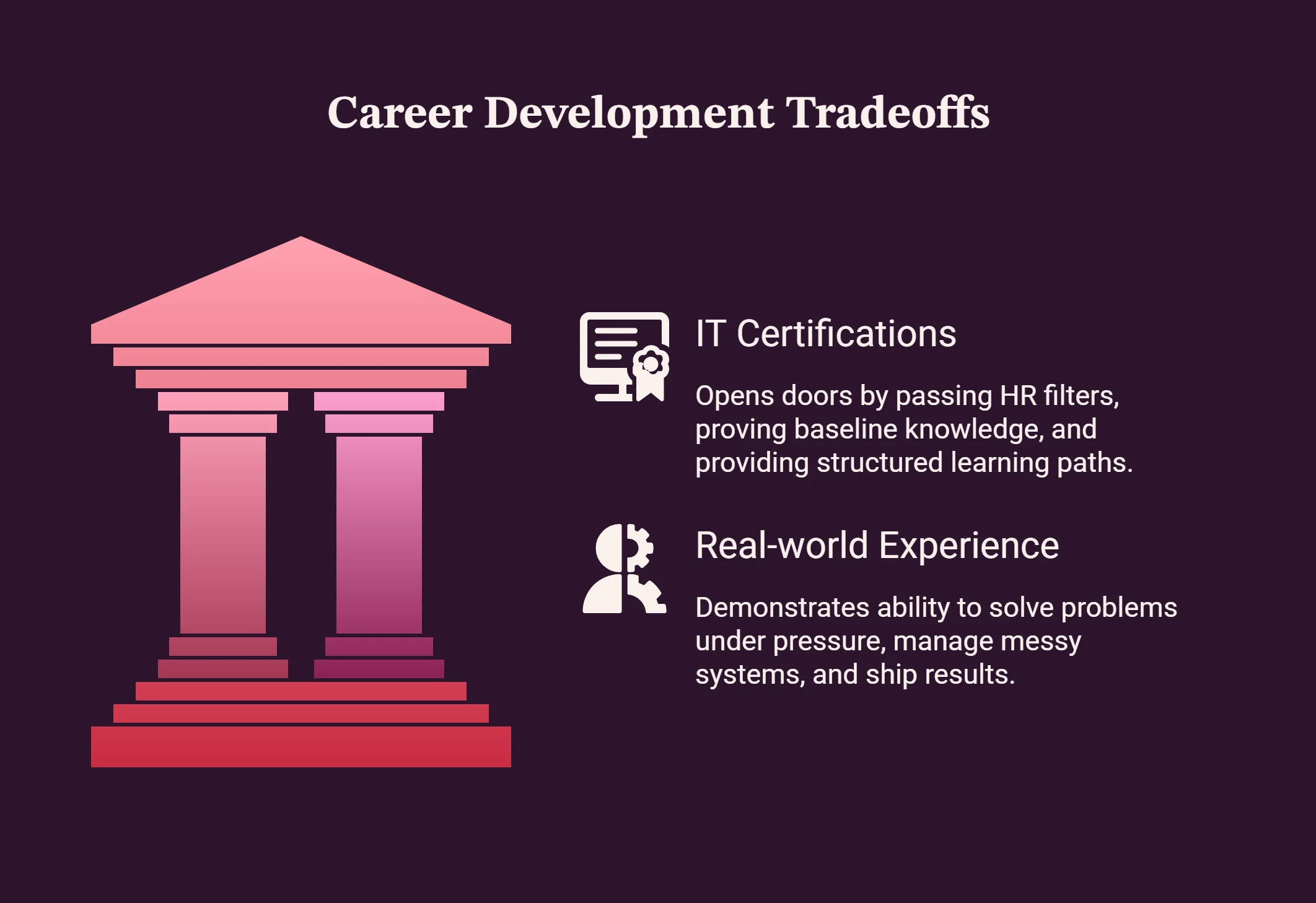
What You'll Gain by Understanding Certification vs Experience
Discover how employers weigh certifications and practical experience
Uncover which matters more for early and mid-career tech pros
Understand how to balance your professional development for career growth
Certification vs Experience: Defining the Debate in IT Careers
The ongoing debate of certification vs experience shapes hiring and promotion decisions in tech. On one side, certifications reflect structured learning and mastery of technical skills through training courses and exams. These credentials—sometimes even more than a college degree—show potential employers your dedication to your chosen field and your willingness to learn.
On the other side, experience means practical, on-the-job lessons you gain through project delivery, teamwork, and day-to-day problem solving. It’s the evidence that you can translate textbook knowledge into real solutions—an area where experienced professionals stand out. Most hiring teams consider experience the clearest proof that you can adapt to fast-evolving job requirements in the tech world.
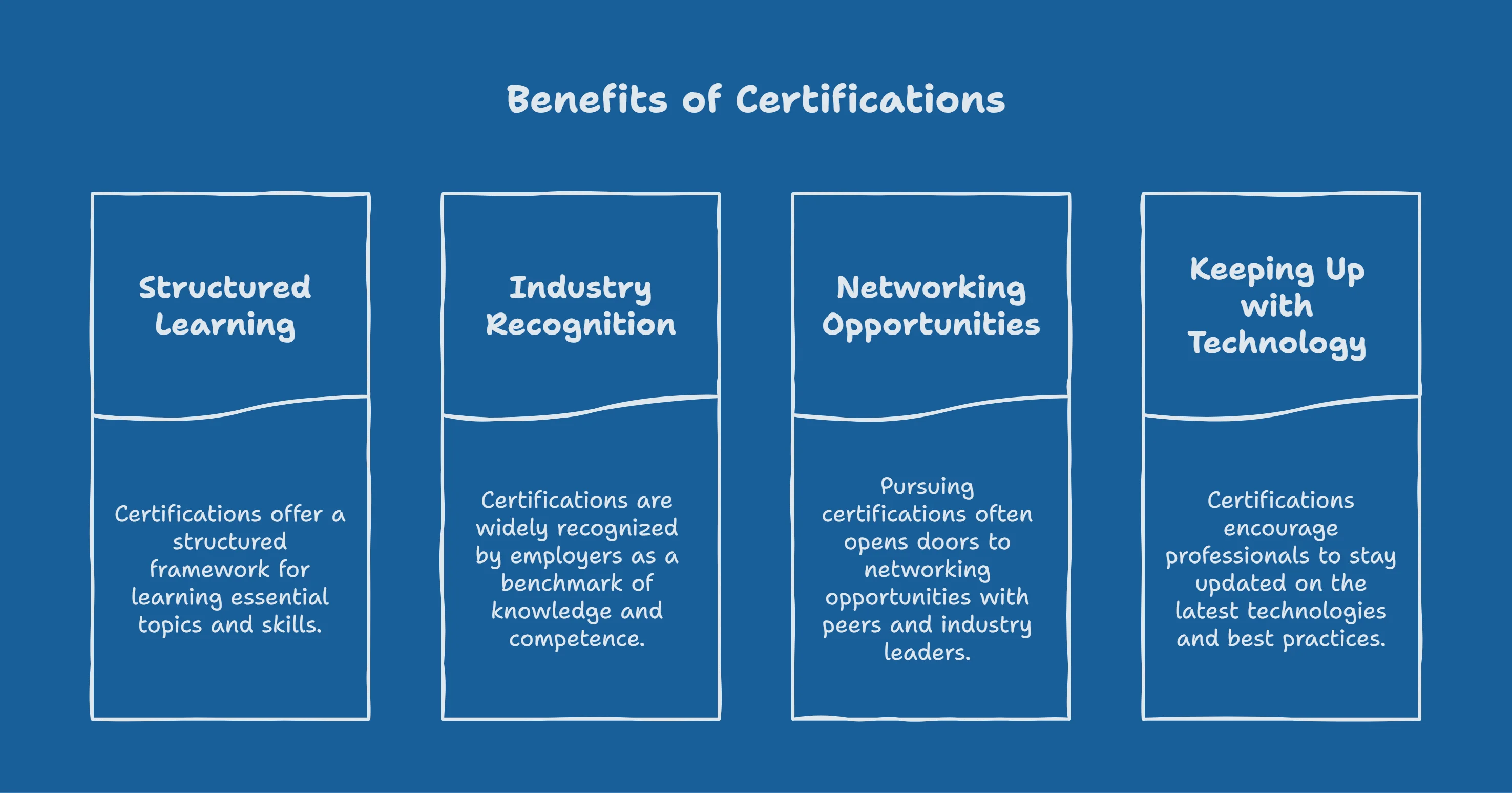
What is the difference between certification and experience?
Certification is often a badge earned by passing an exam or a series of training courses from a recognized issuing organization. It’s measured, objective, and easy for hiring teams to verify during the hiring process. Experience , by contrast, is tied directly to the work you’ve delivered in a real-world setting. That means exposure to the unexpected, developing a deep skill set beyond the theory, and gaining references from a previous employer to verify your capabilities.
Crucially, both sides offer unique advantages. Certifications provide a quick proof of certain technical skills—even if you lack work experience—while experience confirms you can perform in a specific job role. Understanding the differences between certifications and experience is vital for shaping an optimal path for career growth.
How Employers Weigh Certifications and Experience for Career Growth
The approach to certification vs experience may vary depending on the employer’s needs, the tech sector, and the specific job. Entry-level roles often lean heavily on certifications because candidates may not have much practical exposure. Here, foundational credentials can open doors that might remain closed for those with only raw passion or informal learning.
For mid-level and senior roles, however, hiring managers are laser-focused on proven work experience. They seek evidence that you can handle increasing responsibilities, lead teams, or drive significant results. Having both certifications and experience helps candidates stand out for promotions and strategic leadership opportunities.
Certifications and Experience: Hiring Patterns in Tech
Hiring Focus |
Importance to Employers |
Impact on Career Growth |
|---|---|---|
Entry-Level |
Certifications Weighted Heavily |
Boosts Initial Job Prospects |
Mid-Level |
Experience and Certifications |
Underpins Promotions and Pay |
Senior-Level |
Experience Dominates |
Determines Leadership Roles |
Does Certification Count as Experience in IT Hiring?
There’s a common misconception that simply holding a certification “counts” as equivalent to hands-on work experience. In reality, while certifications remain important, most hiring teams view them as evidence of theoretical or academic achievement—not as true substitutes for substantial, real-world learning.
Certifications can show you’ve mastered concepts and can be a prerequisite to moving through an interview process , but they rarely check the same box as actually performing a specific job in the field.
That said, certain certifications now embed practical labs or scenario-based testing—an attempt to bridge this gap. Even so, employers still weigh your ability to apply that knowledge through work experience above all. Certifications and experience both help you get noticed, but your experience is what ultimately convinces interviewers you can thrive in the role.

"Certifications may open the door, but experience walks you through." – Tech Industry Leader
Certifications and Experience: Which Is Better for Career Advancement?
The question often isn’t which is better— certifications or experience —but rather how to use both strategically for career advancement. For those starting out, certifications in highly sought areas (cloud computing, networking, cybersecurity) can open doors that otherwise require years of work experience to unlock. You demonstrate a baseline of knowledge aligned with the latest technological standards.
For those eyeing a mid-level or senior job role , experience takes top priority. It proves your resilience and ability to adapt in a dynamic environment. The best approach is to treat certifications as foundation stones—stepping stones toward greater responsibility, not as replacements for experience.
Which is better, experience or qualification?
Experts widely agree that in the world of IT and tech , neither certifications nor experience alone can carry your career forever. Qualifications can help you land that vital first or second role, but robust experience and a diverse skill set will propel you forward, especially when leadership or specialized expertise is required. Ultimately, the relative importance of each shifts as you advance in your chosen field.
IT Career Growth: Balancing Certifications and Experience
Striking the right balance between certifications and experience isn’t always clear-cut. For early-career professionals , obtaining respected foundational certifications—such as CompTIA A+, CCNA, or AWS Certified Solutions Architect—can signal instant value to employers. However, supplementing those certs with hands-on projects, internships, or even volunteer opportunities is what builds a comprehensive skill set recognized in any hiring process.
As technology rapidly evolves, continuous learning is non-negotiable. Employers expect candidates to actively update skills through both training courses and real-world problem solving. Staying relevant is the only way to outpace the competition and consistently find new career growth opportunities as an experienced IT professional.
Combine foundational certifications with hands-on projects to stand out
Leverage internships and volunteer work to complement your technical credentials
Continuously update skills to stay relevant in the tech industry

What's the Difference Between Qualifications and Experience?
Qualifications , such as certifications, diplomas, or degrees, reflect your formal accomplishments through structured learning. Employers value these because they signify a standard of excellence verified by an external body. However, having only qualifications can sometimes signal a lack of the agility needed in ever-changing tech environments.
Experience demonstrates how you perform when facing real-world challenges, from technical troubleshooting to managing teams and delivering against tight deadlines. While qualifications secure attention during the hiring process , experience sustains your momentum and builds leadership credibility. For holistic career advancement, both are essential—but rely too heavily on either, and you may encounter barriers to growth.
Overcoming Common Misconceptions: Certifications and Experience in Tech
Too often, job seekers assume that certifications and experience alone will guarantee employment. Yet surveys of leading hiring teams show a clear pattern: certifications get you noticed, but without supporting evidence of real work experience or applicable technical skills , offers remain rare. Employers crave candidates who balance the rigor of structured learning with a demonstrable record of impact.
The best path to career growth in tech is a balanced one—supplementing certifications and experience by actively accumulating hands-on skills, and constantly updating both as technologies evolve.
Myth vs Reality: Do Certifications Guarantee a Job Without Experience?
Myth: Certifications alone guarantee employment
Reality: Most tech recruiters seek a blend of practical and theoretical knowledge
Analysis: How Hiring Managers View Certifications and Experience
In recent video interviews with hiring managers, a common theme emerged. Most believe certifications validate determination and a desire to learn, which is helpful in the initial screening. Yet, when making final hiring decisions, these leaders rely far more on descriptions of previous employer projects, technical challenges overcome, and a clear fit for the specific job role. Balanced candidates—those who pair certifications with a track record of real results—are considered top talent and move fastest through the hiring process.
Ultimately, while certifications may help "open doors," it’s your portfolio of experience and impact that delivers job offers and consistent career growth.
Top Certifications That Can Accelerate Career Growth Without Traditional Experience
CompTIA A+
Cisco Certified Network Associate (CCNA)
AWS Certified Solutions Architect
Microsoft Certified: Azure Fundamentals
People Also Ask
What is the difference between certification and experience?
Certification is a formal recognition that you have mastered a specific set of skills or knowledge—usually awarded after passing standardized exams or training courses. Experience is the hands-on practice you gain by actively working in the industry, solving real problems, navigating workplace challenges, and exceeding job expectations. Both play key roles in shaping a successful IT career.
Does certification count as experience?
While certifications demonstrate technical competence and knowledge, most employers consider them separate from actual work experience. Certifications boost your profile in job applications, but they do not replace the impact and credibility that come from performing a job in the field. Experience is earned through practice, not just study.
Which is better, experience or qualification?
It depends on where you are in your career growth. For entry-level candidates, a well-known certification can help you qualify for interviews and meet job requirements. In contrast, as you progress to mid-level or leadership roles, proven work experience becomes significantly more important in advancing your career.

What's the difference between qualifications and experience?
Qualifications—such as certifications, degrees, or diplomas—are formal markers of completed structured learning and skill assessments. Experience demonstrates your ability to thrive in real work environments, adapt to changing requirements, and contribute effectively to a team or organization. Combining both creates the strongest foundation for long-term career advancement.
Industry Leaders on Certification vs Experience
"A certification may get your resume past the first filter, but real progress demands proven results." – CTO, Global Tech Solutions
"We hire for attitude and aptitude, but promote based on experience." – Senior HR Manager, Fortune 500 Company

Frequently Asked Questions About Career Growth Through Certifications and Experience
How do I choose between pursuing certifications and gaining experience?
Match your approach with your immediate goals: if you’re entering a new technical field, begin with foundational certifications to prove readiness for interviews. Simultaneously, seek internships or volunteer roles that provide hands-on experience.Can certifications help if I’m making a career switch?
Absolutely. Certifications demonstrate commitment and knowledge, making you a credible candidate for entry-level opportunities in your new field—even if your past experience lies elsewhere.Will experience outweigh certifications as I advance?
Yes. As you progress, employers prioritize leadership, adaptability, and past impact. These are proven through accumulated work experience, complemented by up-to-date certifications.
Crafting Your Path: Blending Certification and Experience for Ultimate Career Growth
Start with relevant, respected certifications in your chosen IT field
Seek internships or real-world projects to gain hands-on experience
Continuously update your certifications as technologies evolve
Document achievements and quantify your impact in each role

Final Thoughts: Making Certification vs Experience Work for You
It doesn’t have to be certification versus experience — it’s how you use both that counts. Let your certifications validate your knowledge while your hands-on work proves you can deliver in the real world. Treat them as stepping stones you can alternate between: study, apply, reflect, repeat, and you’ll supercharge your growth faster than choosing one path alone.
Pick certifications that map to your goals, then turn every new concept into a small project, a portfolio entry, or an on-the-job win. Do that consistently and you’ll be unstoppable in the tech industry — so choose one cert to pursue and one project to build this week, and get moving.
Ready to Take Charge of Your Career Growth?
Whether you’re new to IT or looking to break through the next ceiling, don’t choose between certification vs experience —embrace both. Start your journey today and craft a path unique to your goals!
If you’re eager to go beyond the basics and truly master the art of IT career development, consider exploring advanced strategies that blend learning with real-world application. Our comprehensive resource on IT certification success beyond the books dives deeper into actionable steps, mindset shifts, and proven techniques for long-term growth.
By expanding your approach, you’ll not only stand out in a crowded field but also future-proof your skills as technology evolves. Take the next step and unlock your full potential in the tech industry.
When evaluating the importance of certifications versus experience in IT careers, it’s essential to consider insights from industry experts. The article “Ask the IT Career Doctor: Certifications vs. Experience” on Dice.com emphasizes that while certifications can indicate knowledge in a given area, they don’t demonstrate the ability to apply that knowledge in the workplace. Employers often prioritize candidates with a proven track record of real-world contributions.
Similarly, the piece “IT Certifications vs Experience vs Degree | What’s Most Important” from ITCareerFinder.com highlights that while certifications are valuable, real-world experience remains the best indicator of how well you will perform on a new job. Employers look to your actual experience to grasp how well you are able to execute in a work setting.
If you’re serious about advancing in the IT field, these resources provide valuable perspectives on balancing certifications and practical experience to enhance your career prospects. ITCertificationJump.com



Write A Comment