

Stepping into AI can feel overwhelming, but every expert started somewhere. Embracing your beginner status is the first step to success. Discover how understanding AI careers now empowers your future, turning curiosity into opportunity and opening doors you never imagined possible.

How to Start a Career in AI as a Beginner
Here is how beginners can kickstart a career in AI:
Identify your interest: Choose between technical roles (like machine learning) or non-technical roles (like AI product management).
Learn the fundamentals: Master basics like data literacy, prompt engineering, or programming languages like Python.
Build a portfolio: Apply your knowledge to small, real-world AI projects to showcase your skills.
Stay curious: The AI landscape evolves rapidly, making continuous learning your greatest asset.
Why AI Careers for Beginners Matter in Today’s World
AI has become one of the driving forces in today’s technology-focused world, influencing industries ranging from healthcare and finance to entertainment and transportation. For beginners, the surge in AI jobs represents an unprecedented opportunity. With constant innovation and continual growth, those starting out can quickly find themselves at the forefront of industry-changing projects. Companies seek fresh perspectives to fuel their AI models and crave new minds willing to tackle the latest challenges in machine learning and data science.
The job market for AI careers is notably open to newcomers. Many entry-level AI jobs don’t require years of experience or advanced degrees. Instead, they value passion, problem-solving capability, and a hunger for knowledge—qualities that any dedicated beginner can demonstrate. The integration of AI systems across various fields also means a wider range of roles available for people with diverse backgrounds and strengths. The path to an AI job is no longer just for a select few; it is accessible for anyone committed to learning and growth.
“The AI landscape is evolving so quickly, even those just starting have the chance to add real value. ” — Dr. Meena Tiruvilu, AI Research Lead

What You'll Learn About AI Careers for Beginners
An overview of entry-level AI jobs and roles
Required skills for AI careers for beginners
Common challenges and how to overcome them
Growth opportunities and career paths in artificial intelligence
Practices for effective AI training
Understanding AI Careers for Beginners: Key Concepts and Definitions
Before stepping into your first AI job, it's important to understand the landscape. AI careers for beginners cover a broad spectrum—from technical roles in machine learning and code to creative positions supporting AI systems. The growth of artificial intelligence means new entry points are opening daily, with employers valuing adaptability and a willingness to learn over traditional requirements.
For many, the idea of breaking into an AI career is daunting, but foundational knowledge in computer science and data analysis provides a launchpad. From there, the path is flexible enough to welcome those from non-technical backgrounds as well. Whether your strength is analytical thinking, creativity, or communication, there is an AI role where you can thrive.
What Is an AI Job? Entry Points and Role Descriptions
At its core, an AI job involves working with technologies that simulate human intelligence. Beginners have multiple entry points, such as supporting AI engineers or assisting in the development of AI models. Roles range from implementing pre-built AI tools to analyzing results and maintaining AI systems. The key is to find a position that matches your current skill set while providing room for growth through ongoing AI training.
Many entry-level AI jobs focus on assisting with routine tasks, like data cleaning, helping to design experiments, or testing AI and machine learning scripts. As a new professional, you might also support troubleshooting AI work or contribute to documentation and research. These roles require curiosity, attention to detail, and a willingness to collaborate with experienced data scientists or machine learning engineers who will become valuable mentors on your journey.

The Role of AI Systems and Machine Learning in Modern Work
AI systems and machine learning are foundations of digital transformation in the workplace. Companies rely on these technologies to automate complex tasks, provide insights from data, and build customer-focused tools faster than ever. AI jobs increasingly involve using pre-trained AI models or creating new ones to tackle specific problems, such as predicting trends, personalizing recommendations, or identifying anomalies in large datasets.
For beginners, understanding how AI and machine learning fit into everyday AI work is crucial. Today’s ai role often means collaborating in cross-functional teams that develop, deploy, and monitor AI tools integrated with existing business systems. Becoming familiar with these processes helps you see where you may add unique value and paves the way for growth within your chosen career path in artificial intelligence.
AI Careers for Beginners: Entry Points, Skills, and Potential Roles
Entry Point |
Basic Skills Needed |
Potential Roles |
|---|---|---|
Technical |
Python, data structures, statistics, computer science basics |
AI Engineer (junior), Machine Learning Intern, Data Analyst |
Data & Analysis |
Excel, data cleaning, visualization, critical thinking |
Data Science Assistant, AI Research Assistant |
Support/Business |
Communication, documentation, project management tools |
AI Support Specialist, Project Coordinator |
As you explore the various entry points and foundational skills needed for AI roles, it’s helpful to clarify the distinctions between artificial intelligence, machine learning, and deep learning. Understanding these core concepts can make your learning journey smoother and help you target the right skills for your desired path. For a clear breakdown of how these technologies differ and intersect, check out this guide on AI vs. machine learning vs. deep learning.

Common AI Jobs for Beginners and Entry Points
For those just starting, the number of roles welcoming beginners in AI careers is steadily growing. You might find your first AI job as a junior AI engineer, an assistant in a data scientist team, or even as a support specialist ensuring users get the most out of AI systems. Employers are interested in people who show a willingness to tackle problems, build a strong foundation, and seek out AI training opportunities.
Entry points vary by industry. Tech companies might offer machine learning internships or rotational programs, while startups, healthcare organizations, or finance firms often seek associates able to assist with data gathering and validation. Even without a degree in computer science, you can enter these roles by demonstrating problem-solving skills and a basic understanding of how artificial intelligence works.
AI Engineer (Junior level)
Data Scientist (Associate and Analyst roles)
AI Research Assistant
Machine Learning Intern
AI Support Specialist
“Starting as a beginner in AI is about leveraging transferable skills—don’t underestimate the value of learning foundational concepts. ” — Javier Morales, Data Scientist
Essential Skills for Level AI Jobs for Beginners
Strong foundational skills are the backbone of any successful AI career. For beginners, the focus should be on mastering key concepts and developing adaptability. Employers often look for candidates who have a basic grasp of computer science, mathematics—including statistics—and data science. But even more, they seek those eager to upskill and participate actively in AI training initiatives.
Developing these core abilities is often more critical than having years of experience. Fundamental coding knowledge, an analytical mindset, and the ability to interpret and visualize data open doors to level AI jobs at reputable organizations. As you grow familiar with AI tools and AI models, you’ll find yourself ready to tackle more complex challenges and support AI systems that shape tomorrow’s world.
Foundational Skills: Computer Science, Data Science, and Math
One of the best ways to start is by building up your knowledge in computer science, which covers everything from algorithms and data structures to software engineering practices. A solid grasp of data science concepts—data cleaning, exploratory data analysis, and basic statistics—will give you the tools to contribute meaningfully in many AI roles. Math, particularly linear algebra, calculus, and probability, underpins most modern machine learning work.
Even for beginners, accessible resources and free AI training courses lay the groundwork for understanding how artificial intelligence operates. You don’t need a research-level background; instead, focus on learning the big-picture fundamentals and reinforcing them through practice. This approach helps you build a strong base, which is crucial for long-term advancement in the dynamic AI job market.

Developing Proficiency in Programming for AI Careers for Beginners
Programming is a must-have skill in AI careers, and beginners have countless resources to develop proficiency. Language choices like Python, R, and Java dominate the field, with Python being the most prevalent for its simplicity and robust AI tool libraries.
Free online platforms and structured AI training courses guide you from syntax basics to building your first machine learning model. Practice is essential; completing hands-on projects exposes you to real-world AI challenges and helps you understand how different components—from algorithms to data pipelines—fit together.
Many entry-level candidates create their own AI projects as proofs of concept to present to employers. Demonstrating your ability to read, write, and debug code is often more valuable than a long resume for entry point roles. The key is consistency and curiosity—start with example datasets, experiment, and share your solutions through social platforms or code repositories.
Popular programming languages: Python, R, Java
Free and paid online AI training resources
Hands-on project ideas for practice
Typical Career Paths in Artificial Intelligence
As you settle into your first AI job, you’ll find multiple directions for your career path. Many organizations offer linear paths, from junior to mid-level and senior positions. However, the field of artificial intelligence is dynamic, making transitions between specialized roles common. An early focus on broad learning lets beginners sample different disciplines, from data science to machine learning, before eventually choosing a specialty aligned with their passion.
The journey from beginner to expert is rarely straight. Continuous involvement in AI training, taking part in collaborative projects, and networking with peers and mentors all accelerate your progression. Over time, you might find yourself branching into related technical domains or even leading teams shaping the future of AI systems.

Advancing from Entry-Level to Senior AI Jobs
Most AI careers start with junior or assistant roles, focused on supporting experienced staff and learning on the job. Advancement comes through a mix of performance, demonstrated initiative, and participation in ongoing AI training. Over time, you can move from working on narrow tasks to leading complex AI projects and designing AI models from the ground up. This progression is often supported by certifications, online courses, and active contribution to real-world problem solving.
Many organizations seek passionate professionals willing to formalize their learning. As you advance, opportunities emerge to take on mentorship responsibilities, manage teams, or specialize in emerging fields like explainable AI or human-centric AI work. The ladder is there for those who seize it, and the more hands-on experience you gather, the further you’ll progress in your AI career.
Transitioning Across AI Roles and Specializations
The beauty of artificial intelligence is that no single AI job defines your career. With experience, you can move laterally into different specialties—ranging from natural language processing and computer vision to data engineering or AI ethics. Companies value employees willing to learn across fields and diversify their skill set.
Ongoing AI training, attendance at industry conferences, and involvement in interdisciplinary teams broaden your perspective and readiness for new challenges. Such flexibility ensures your expertise remains current and enhances your long-term value in the job market. It's common for today's junior AI engineer to become tomorrow's lead architect or AI product owner.
Artificial Intelligence Career Pathways: Beginner to Expert
Level |
Roles |
Typical Requirements |
Possible Transitions |
|---|---|---|---|
Beginner |
Support Specialist, Junior AI Engineer, Research Assistant |
Basic programming, foundational math, hands-on projects |
Data Analyst, Associate Data Scientist |
Intermediate |
AI Developer, Data Scientist, Machine Learning Engineer |
2+ years of experience, advanced AI training, project leadership |
Technical Lead, AI Product Manager |
Senior/Expert |
AI Architect, Research Scientist, Head of AI |
Extensive project portfolio, specializations, certifications |
Director, Executive roles |
“Many entry-level AI roles lead to diverse opportunities across industries—start broad and specialize as you gain experience. ” — Dr. Hiral Shah, AI Program Director
AI Training: Certification, Bootcamps, and Self-Learning for Beginners
Structured AI training empowers beginners to compete for top spots in the ai job market. Online courses, bootcamps, and industry-recognized certifications teach both essentials and advanced techniques, often through project-based curricula aligned with real-world AI and machine learning challenges. Many programs are flexible, enabling learners to balance other commitments while gaining deep knowledge at their own pace.
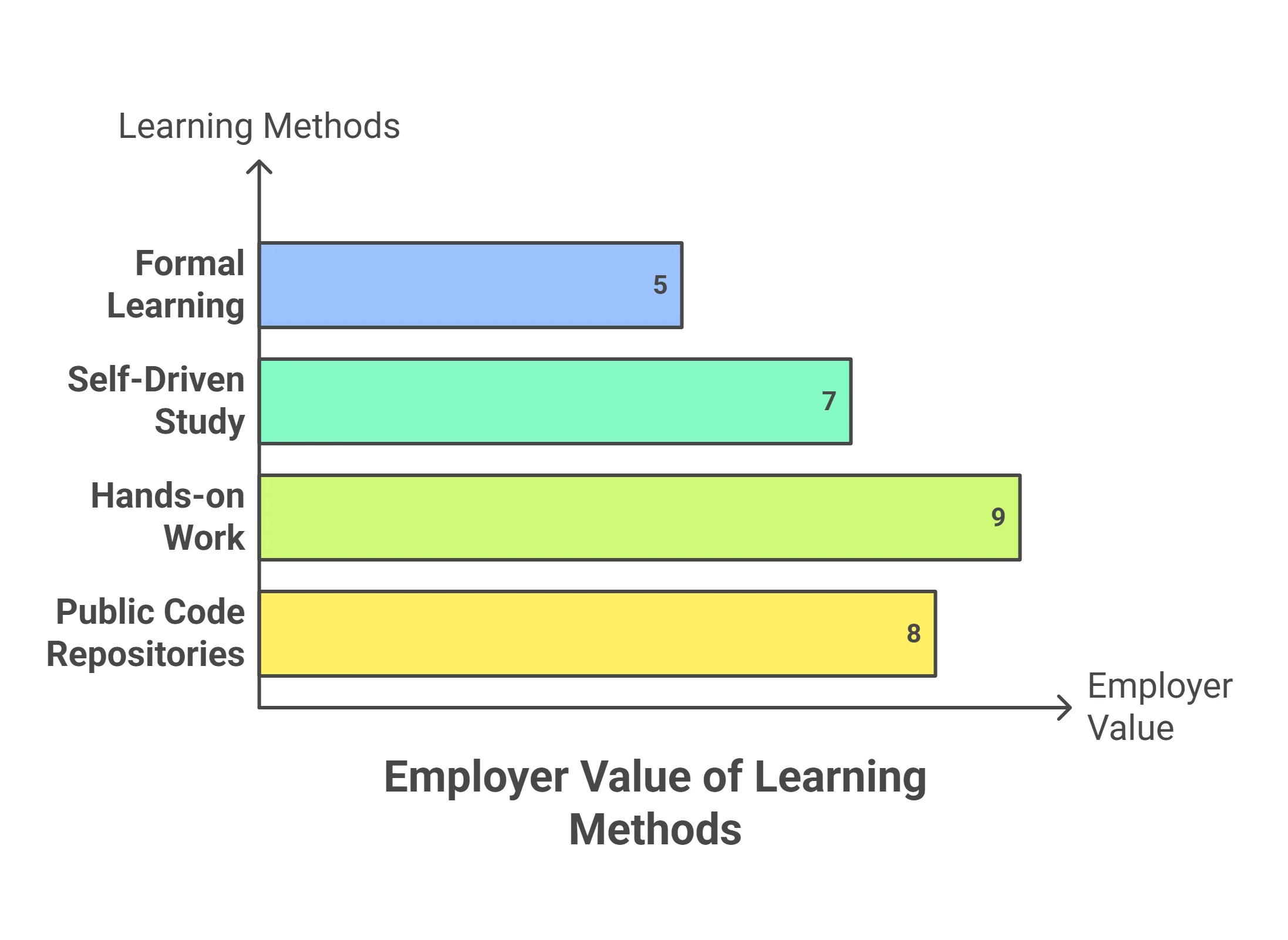
In addition to formal learning, self-driven study—through online resources, reading, or experimentation with AI models—plays a crucial role. Employers increasingly value portfolios of hands-on work and public code repositories alongside formal credentials. These show your willingness to innovate, apply theory to practice, and solve problems creatively.
Top Online Courses and Certifications for AI Careers for Beginners
There’s no shortage of reputable platforms offering intro and advanced content in artificial intelligence: Coursera, edX, Udacity, and DataCamp lead the field, often partnering with major universities and companies for real value. Certifications such as Google’s TensorFlow Developer or Microsoft’s AI Engineer credential serve as strong validation for hiring managers.
A practical tip: choose courses that blend AI training with opportunities to build projects you can showcase. The AI job market thrives on demonstrable skill—certificates are a strong start, but project portfolios and visible community engagement often open even more doors.
Building Practical Experience with AI Projects
Nothing signals commitment like hands-on experience. Participating in online AI competitions or contributing to open-source projects is powerful proof of your skills. Platforms like Kaggle allow you to practice data science and machine learning, collaborate with others, and learn from the best.
Local AI meetups, hackathons, and webinars help beginners find mentorship opportunities, understand current trends, and build networks. Documenting your journey—publishing code, writing about your projects, or speaking at industry events—enhances your public profile and connects you with hiring managers searching for up-and-coming talent.
Competitions for beginners (like Kaggle)
Open-source projects
Local AI meetups and hackathons

“Self-driven learning and project-based experience speak volumes on a beginner’s resume—it’s about showing real skills, not just credentials. ” — Priya Nair, Senior Machine Learning Engineer
Exploring Industries Hiring for AI Careers for Beginners
The diversity of AI jobs today is truly remarkable. Industries ranging from finance, healthcare, and manufacturing to marketing and logistics all seek entry-level professionals trained in AI and machine learning. Whether supporting AI systems in an insurance company or joining a tech firm to implement AI tools, the breadth of applications means your skills are relevant almost everywhere.
Corporate giants, fast-growing startups, and even mid-sized businesses have realized the competitive advantage provided by level AI jobs. For beginners, this wide demand creates options to pursue positions that align with personal passions or explore sectors they had never previously considered. The future of AI work is boundaryless.

In-Demand AI Jobs Across Sectors
Today, entry-level ai jobs are vital in healthcare (for patient data analytics), finance (for fraud detection), e-commerce (for personalizing user experience), and manufacturing (for predictive maintenance and QC). These roles involve helping design, implement, and troubleshoot AI models that drive efficiency and growth. Each sector values different specializations, so exploring several can help you land the right ai role for your interests and skills.
Technical ai jobs are especially in demand, but companies are increasingly seeking professionals who can translate technical work to business outcomes. Communication, adaptability, and creative problem-solving are recognized as just as important as programming chops.
How Different Companies Approach Hiring at Entry-Level
Large tech firms typically offer rotational programs or internships for those seeking a career path in artificial intelligence, supporting new recruits with mentorship and structured AI training. Startups and mid-sized firms may focus on real-world project portfolios or demonstrated AI skills gained from bootcamps and competitions.
Many employers value passion and adaptability above a formal degree in computer science—meaning a strong self-study record and community involvement can make your application stand out.
Applicants are often assessed using code challenges, technical interviews, or real-world problem-solving tasks. Demonstrating initiative by tackling AI projects outside of work, publishing your code, or even supporting AI tools in an open-source environment, can be the difference-maker in landing your first job.

People Also Ask: AI Careers for Beginners
How do I start an AI career with no experience?
Breaking into an AI career without prior experience is not only possible but also increasingly common. Start with free or low-cost AI training courses to learn the basics of machine learning, data science, and programming.
Build hands-on projects to demonstrate your capabilities, contribute to open-source initiatives, and seek out mentorship from those further along in their career path. Employers value curiosity, persistence, and a strong foundation more than a traditional background.
Active engagement on social platforms like GitHub, Kaggle, and LinkedIn also helps showcase your work and connects you with potential collaborators and employers seeking new talent in artificial intelligence.

What is the easiest AI job to get?
The easiest AI job to get for beginners is often as an AI support specialist or AI research assistant. These roles require a foundational understanding of AI and basic data handling but emphasize your willingness to learn. By focusing on building practical skills and participating in AI training, you can demonstrate readiness for these entry-level positions—many of which open the door to more technical level AI jobs later on.
Employers also look for candidates passionate about supporting AI models, troubleshooting tasks, and contributing to team projects, which are ideal starting responsibilities for those new to the field.
What job makes $10,000 a month without a degree?
While many high-paying ai jobs ultimately require advanced skills and experience, it’s possible for skilled data analysts or freelance AI engineers to achieve substantial incomes without a formal degree—especially when supported by impressive portfolios and proven results. Freelance or contract AI work can be lucrative, as can roles in certain high-growth startups hiring for skill over credentials. However, it takes determination, ongoing AI training, and networking to reach this level, regardless of formal education.
As your expertise and reputation grow in artificial intelligence, opportunities abound for substantial financial advancement, though patience, consistency, and continual learning are key.
Which 3 jobs will survive AI?
The future of AI work is brightest for roles requiring creativity, critical thinking, and the ability to manage or interpret AI systems. Three jobs that will thrive are: AI Product Managers: bridging business needs and technology Data Scientists: extracting insights and storytelling with data Human-AI Interaction Specialists: focusing on responsible, ethical AI deployment AI will augment—not replace—these careers, making them highly resilient as technology advances.
“Mentorship and peer learning are pivotal for anyone starting out. The AI community is collaborative—take advantage of it. ” — Leah Kim, AI Product Manager
Tips to Succeed in AI Careers for Beginners
Commit to ongoing AI training and education: The more you learn, the more valuable you become.
Network through online forums and AI groups: Build connections that offer advice, referrals, or collaboration opportunities.
Participate in AI projects to build your portfolio: Real-world examples impress employers and demonstrate initiative.
Seek mentorship opportunities in the field: Experienced professionals accelerate your growth and help navigate challenges.
FAQs on AI Careers for Beginners
Is a degree required to start an AI career for beginners?
No, a traditional degree is not always required for ai jobs. Many employers value practical skills gained from AI training, bootcamps, and self-directed learning. Demonstrating hands-on project experience, completing industry certifications, and maintaining an up-to-date portfolio are often sufficient to begin a rewarding AI career.
Can I transition to an AI job from a non-technical background?
Absolutely! While a technical background can be beneficial, many successful AI professionals started in business, design, or other non-technical roles. Focus on AI training, learn the basics of programming, and seek interdisciplinary projects that bridge your existing expertise with emerging AI systems. Your unique perspective can be a significant asset as you transition.
Key Takeaways for AI Careers for Beginners
AI careers for beginners are accessible through various learning paths
Hands-on experience and certifications accelerate progress
Networking and mentorship unlock deeper industry insights
Continuous skill development is central to long-term success

Empower Your Future: Take the First Step Toward an AI Career
Launch your future in artificial intelligence today. Build skills, embrace community, and turn curiosity into lasting impact—For more great IT certification training content, visit: ITCertificationJump. com.
For more great IT certification training content, visit: ITCertificationJump.com
Conclusion
A future in AI is yours for the making—start learning, connect with the community, and embrace each opportunity along your AI career journey.
If you’re inspired to future-proof your career and want to understand how rapid changes in technology are reshaping the workforce, there’s even more to explore. Discover how the pace of skill evolution impacts job security and advancement, and learn strategies to stay ahead in a world where adaptability is key.
For a broader perspective on workforce transformation and actionable tips to keep your skillset sharp, dive into this in-depth look at the blazing speed of workforce skill changes. Your journey in AI is just the beginning—embrace continuous learning and stay ready for what’s next.
Sources
Data Science Central – https://www.datasciencecentral.com/entry-level-ai-careers-for-beginners/
IBM: Artificial Intelligence – https://www.ibm.com/topics/artificial-intelligence
Coursera: AI Career Paths – https://www.coursera.org/articles/ai-career-paths
Built In: AI Jobs – https://builtin.com/artificial-intelligence/ai-jobs
To further enhance your understanding of AI careers for beginners, consider exploring the following resources:
“AI Jobs for Beginners USA”: This article provides a comprehensive guide to entry-level AI positions in the United States, detailing roles such as AI Data Analyst, AI Prompt Engineer, and Junior Machine Learning Assistant. It outlines key responsibilities, required skills, and average salaries, offering practical insights for those starting their AI journey. (blockchain-council.org)
“AI Jobs for Beginners: How to Start a Career in AI”: This guide breaks down beginner-friendly AI roles, the skills needed, and how to start your journey even if you’re completely new to the field. It emphasizes that many AI jobs for beginners don’t require deep coding knowledge or a technical degree, making the field accessible to a broader audience. (bayt.com)
These resources offer valuable insights into the various entry points and skill requirements for AI careers, helping you navigate the path to a successful future in artificial intelligence. ITCertificationJump.com


Write A Comment